
Publications
As Built - Villa Furulund
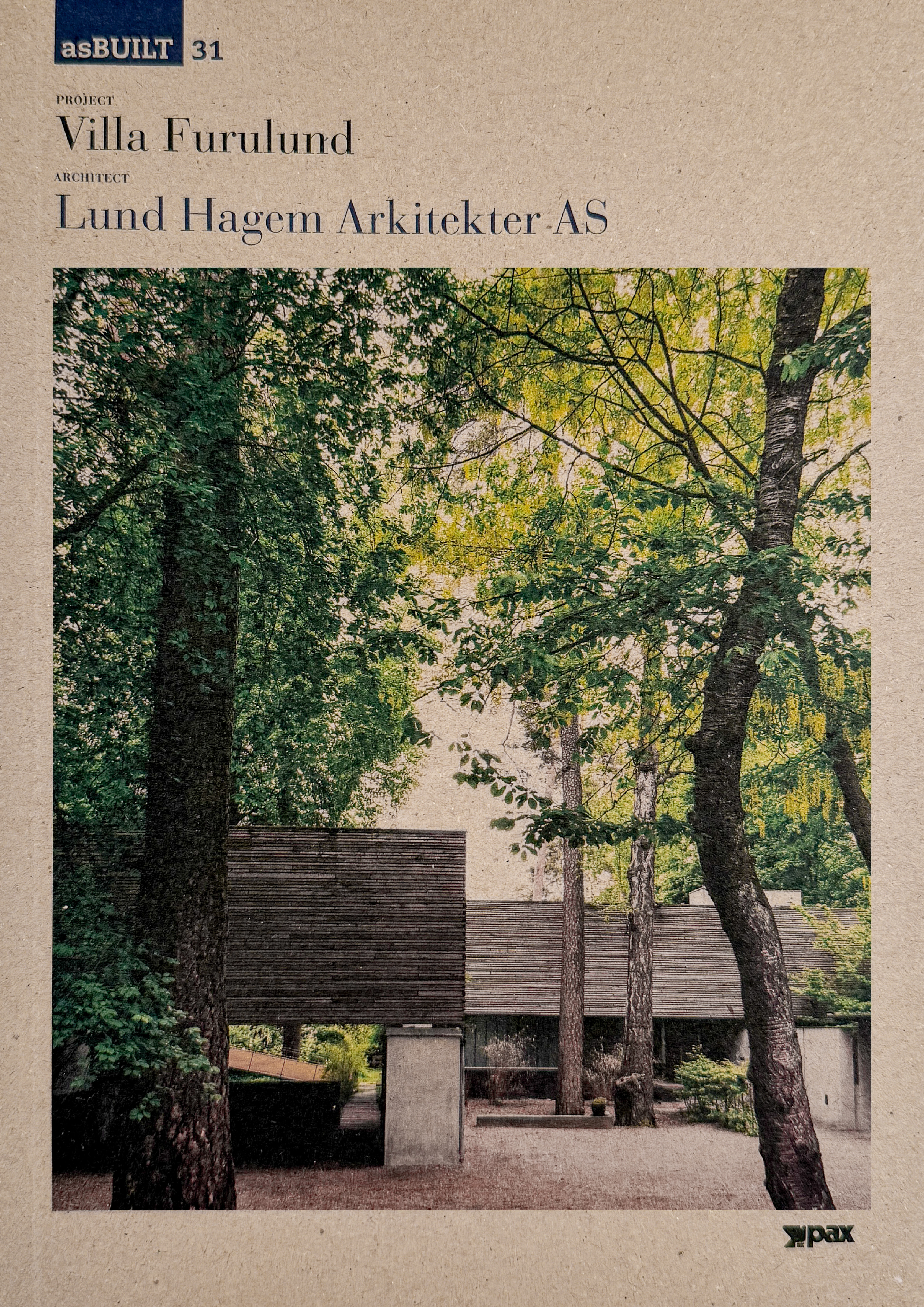
As Built - Villa Furulund, Oslo
Two L-shaped houses separated by a long thick wall, forming two atriums on a plot where all 20 trees were preserved during construction. Architect Luis Callejas finds in the house both theatricality and a Mediterranean atmosphere, pondering whether Mexican and Norwegian architects share a telluric sensibility. "Light is not omnipresent; shadows, proximity to trees, and material continuity are celebrated," he writes in the essay "Chasing Shadows". Villa Furulund was completed in 1998 and awarded the Sundt Prize in 1999 and Houens Fond's diploma in 2000.
As Built - Marienlyst Park, Oslo

As Built - Marienlyst Park
A new set of large residential blocks at Marienlyst, completing an area first built in the 1930s after modernist principles. Lund Hagem won the competition in 2000 to further develop the popular area. Strict regulations demanded that the new resemble the old, structurally and formally, yet the two generations of buildings reflect very different ideals of planning, domesticity and materiality. The old and the new sit together in the green urban landscape at Kirkeveien, quietly marking how much has shifted in between.
Deichman Bjørvika
Deichman Bjørvika - Oslo’s Central Library
The international architecture competition to design Oslo’s new central library was won by Lundhagem in collaboration with Atelier Oslo back in 2009. The librarians wanted a house that would inspire visitors to explore all the new facilities and activities the modern library can offer. This motivated us to create an open and intriguing building in which you are constantly invited around the next corner, to discover new places. With its central location in Bjørvika, the new library is set to become a vibrant hub - a modern meeting place for learning and exchange of knowledge.
Barcode - Instant City
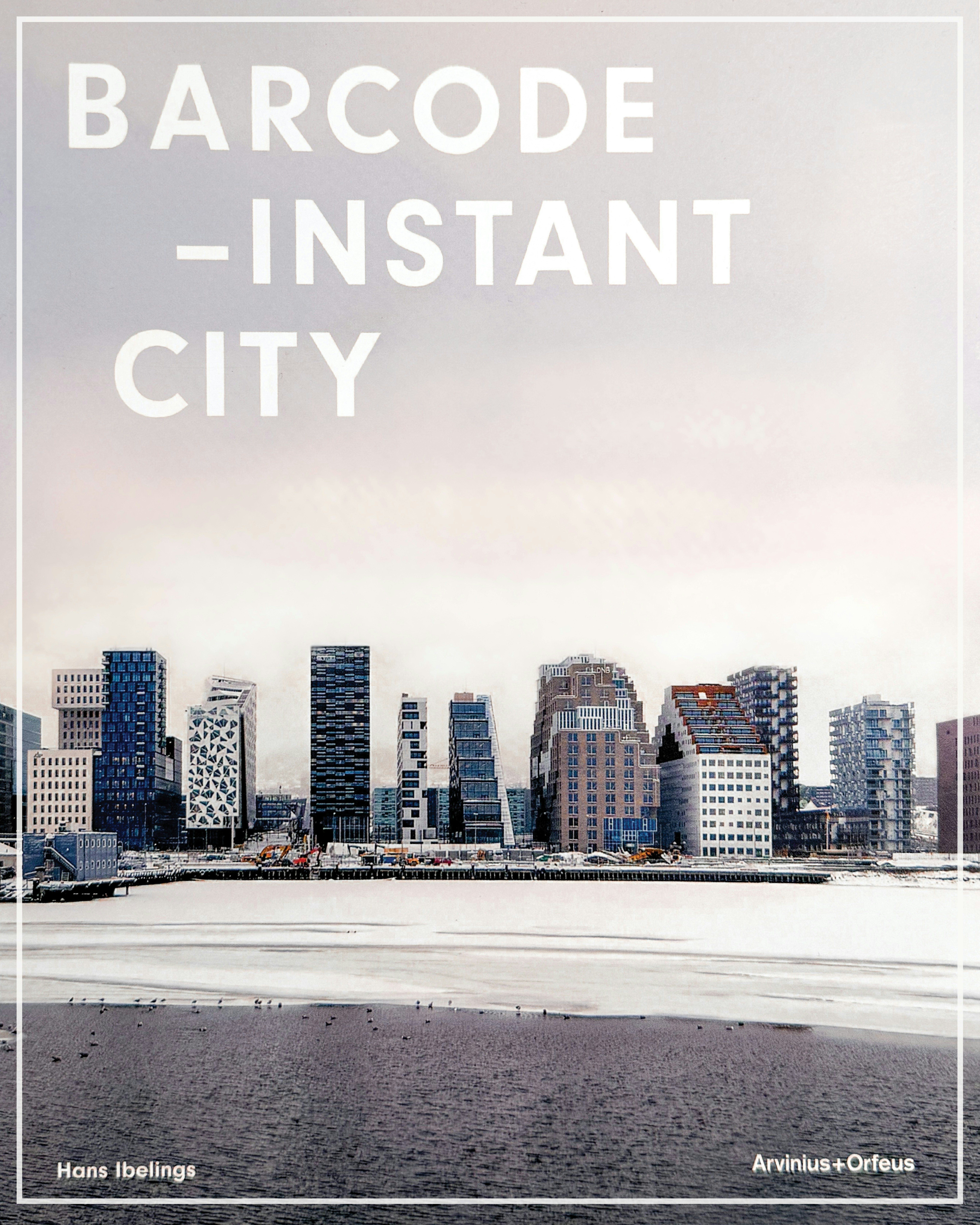
Barcode - Oslo
This book documents how a highly original, competition-winning master plan, conceived by MVRDV, A-LAB and DARK, has contributed to the transformation of Bjørvika and the Oslo Fjord. The author, Hans Ibelings, architecture critic and lecturer, elucidates how the radical clarity of the master plan has provoked innovative architecture that mixes work, living, commercial and leisure in a dense setting. With realisations by the three offices, as well as by SJ arkitekter, Snøhetta, MAD arkitekter and Lund Hagem, Barcode has become a showcase of 21st-century architecture. Richly illustrated, including a photo series exclusive to the book, Barcode – Instant City explores the transformation and the new burst of life at the border between city and fjord.
Built by the sea
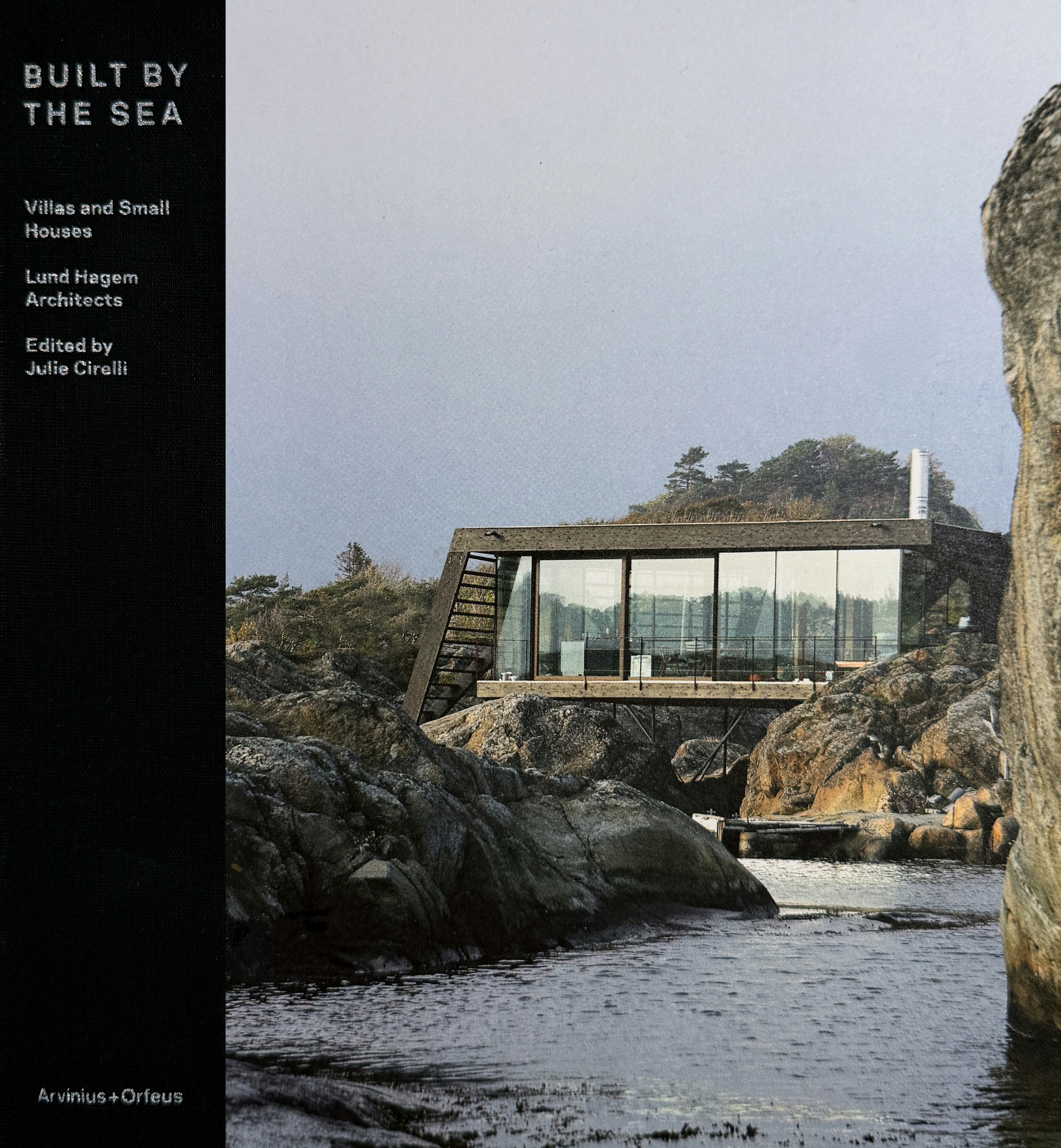
Built by the Sea - Villas and Small Houses
The book is a showcase of private residences and summer houses in which the interplay between the built and unbuilt natural landscape achieves its maximum effect. Norway's Lund Hagem Arkitekter is celebrated for their unique relationship with nature. Established in 1990, the firm has staked their reputation on their unique sensitivity to the interaction between form, material and the existing surroundings. Impressions from the landscape and local buildings create a vocabulary they use as their basis for creating modern architecture rooted in the Nordic tradition. This book will capture the attention of both students and professionals alike, especially those who are interested in Nordic architectural solutions for domestic living in harmony with nature.
The City and Blindern

UiO - Ole-Johan Dahl's building
A book about the architectural history of the University of Oslo, from the first classical buildings in the city centre to the functionalist campus at Blindern. Lund Hagem's Ole-Johan Dahls hus, home to the Institute of Informatics and completed in 2010, is one addition to a campus where each era has left its own architectural mark. Through eight essays and a rich archive of images, the book traces how Norway's oldest university has been shaped by shifting ideals across two centuries.
Magazines
D2 - Cabin Voss

Between the mountains and Bergen. A cabin at Voss.
Text: Benedicte Ramm
Photos: Nils Vik
A cabin at Tråstølen on Voss, completed in 2019 and designed by partner Einar Hagem. The building steps down through the terrain across several levels, securing private views over the valley despite a dense surrounding cabin field. Clad in deep, tar-dark timber both inside and out, the living room splits into two distinct moods: a sheltered corner inspired by a 300-year-old firehouse on the client's family farm, and a wide open space where a panoramic window frames the mountains beyond. Concrete is cast to resemble stacked timber, the floors are polished and dark, and a full-wall fireplace anchors the room.
D2 - VIlla Furulund

Villa Furulund - Designed around the trees
Text: Ola Vikås
Photos: Nils Vik
Svein Lund designed his own home at Ullern in Oslo, completed in 1998, around the trees on the plot, and all 20 were preserved during construction. The house sits low among them, its windows deliberately closed toward the neighbouring houses and open only toward the trunks, leaves and light he wanted to live with. The rooms are low-ceilinged and contrasting in height, shaped by a mix of old and new: a Prouvé chair, a Panton table, a painting by Olav Christopher Jenssen that has found its wall. "You don't need to see everything," says Lund. The house has been a family home, a music studio and a workspace, and it still is all of these things.
D2 - Ambassaden

Ivar Tollefsen’s Fredensborg has transformed the American embassy fortress with uncompromising ambition.
Text: Hugo Lauritz Jenssen
Photos: Nils Vik
The crushed labradorite embedded in the façade's prefabricated concrete panels sparkles and glints. The triangular, dark building mass is stylistically rooted in the finest moments of postwar modernism. After the Americans vacated Eero Saarinen's 1959 embassy building in 2017, Fredensborg painstakingly transformed it. The triangular structure now reopens, housing restaurants, offices, and a bold expansion hidden beneath the entire building.
D2 - Cabin Kragerø

Open to the sea, whatever the weather: A house at Visiterodden, Kragerø.
Text: Benedicte Ramm
Photos: Nils Vik
A house at the water's edge in Kragerø, completed in 2021. Designed by partner Kristine Strøm-Gundersen and architect Erlend Eidsaa, the building is clad in white cedar and divided into two volumes with a pitched roof that sits naturally among the neighbouring houses. Glass walls on the ground floor open fully toward the sea, the rock face behind has been wire-cut and drawn into the interior as a living wall, and wide concrete steps lead down to the water. Sun or rain, the house faces the fjord.
D2 - Deichman Bjørvika
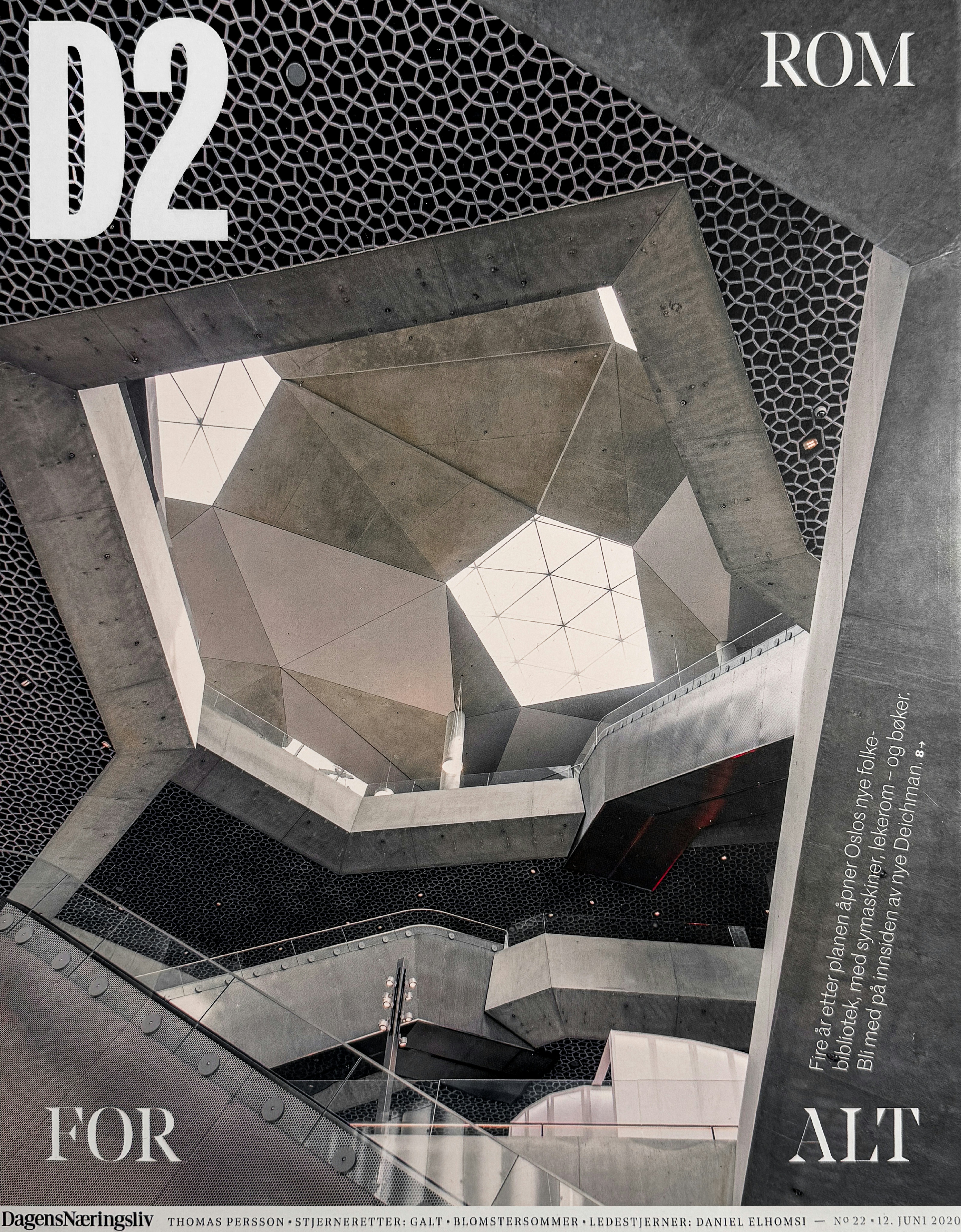
-I think it’s going to be a cool place to hang out.
Deichman’s new main library aims to draw people to Bjørvika.
Text: Ingrid Røise Kielland
Photos: Nils Vik
Looking up toward the ceiling. The municipality wanted the exterior of the new library to act as a backdrop to the opera house rather than appear “sculptural,” explains architect Einar Hagem. “We made up for that on the inside,” he says. Because the site was relatively small, the architects focused on creating interesting sightlines upward, toward the three skylights.
D2 - Cabin Knapphullet

Rooted in the archipelago: Cabin Knapphullet
Text: Kristiane Larssen
Photos: Ivar Kvaal
The cabin sits low in the landscape, almost growing from the rock itself. Architect Svein Lund has long designed coastal retreats along the Norwegian shoreline, small, modest structures that shelter between the trees and face the open sea. "You don't need to see everything at once," says Lund. The new generation of archipelago cabins he has drawn blend quietly into their surroundings, leaving the landscape — and the light — to do the work.
D2 - Cabin Engø

Cabin at Tjøme: Facing the sea
A cabin at Tjøme in Vestfold, clad in titanium panels that shift colour with the light. Shaped as an L in the terrain, the building shelters an outdoor space on the back while the living areas face the sea. A canopy along the facade shields the interior from direct sunlight while letting in strips of light from above, and the titanium sits quietly among the rocks and vegetation around it.
D2 - Cabin Lyngholmen

Shaped by the coastline: Cabin Lyngholmen.
Text: Daniel Buten Schøn
Photos: Nils Vik
At Nordre Lyngholmen in Lillesand, a modest 100 m² cabin replaces an older 1960s structure that had run its course. Completed in 2011, it feels larger than its footprint. Generous terraces extend the living space outward, and a continuous roof ties inside and outside together under one shelter. Not a centimetre is wasted on corridors. Large windows open toward the sea on all sides, letting the landscape do the work. "For me, this cabin shows how good it can be when the client and the architect pull in the same direction," says Svein Lund.
Nytt Rom - Cabin Årø

Low in the landscape. A cabin at Årø, Sandefjord.
Photos: Inger Marie Grini
A cabin at Årø in Sandefjord, set among large oak trees, a pebble beach and a private jetty. The building is divided into three separate volumes placed at different levels in the sloping terrain, connected by steps and passages that create sheltered outdoor spaces between the walls. The exterior is heat-treated ash that will grey with age, while inside, exposed pine construction and a raised roof bring in shadow and warmth. The cabin should blend into its surroundings, be maintenance-free and gradually become one with the nature around it.
Nytt Rom - Gaia Conteinermuseum

Built from what the sea left behind. A container museum in Vesterålen.
A proposed landmark building in Sortland harbour, constructed entirely from discarded containers from the fishing industry. The structure sits on columns anchored to the seabed, appearing to float just above the water's surface, while parts of the building extend below sea level with large glass windows facing into the ocean. The tides and waves make the experience constantly shifting as water rises around the building. Developed in collaboration with Gaia Vesterålen, Museum Nord and Nord University, the project aims for a 95 percent recycling rate, among the highest ever achieved in large-scale construction.
Nytt Rom - Ambassaden

The American Embassy, Oslo
The American Embassy in Oslo was originally designed by Eero Saarinen and completed in 1959. The building is listed and represents one of the finest examples of postwar American modernism in Europe, characterised by its precision steel facade, prefabricated concrete elements and generous atrium.
Our renovation and transformation of the building adds 3,300 square metres of new programme through an excavation 12.5 metres below ground level, housing restaurants, conference facilities and offices. The 577 facade windows have been restored to their original design, and the atrium returned to its original geometry. New technical systems are integrated without trace into the existing architecture. Developed for Fredensberg AS under continuous heritage oversight, the project achieves a BREEAM-NOR Very Good rating and demonstrates how an architecturally significant building can be deepened and renewed without erasing what made it exceptional.
Nytt Rom - Cabin Lyngholmen

Summer House, Lyngholmen
A private summer house on a small island along the Norwegian coast, designed to sit within the landscape rather than impose upon it. The building follows the contours of the site, low and horizontal against the rocks, clad in timber that weathers to match the granite and the sea.
The project grows from a close reading of the place: the movement of light across the water, the relationship between solid rock and open sky, the way the shoreline defines the edge of habitation. Materials and form are chosen to strengthen these qualities rather than compete with them.The house is one of a series of coastal projects developed by the office over many years, each shaped by a specific site along the Norwegian coast and by the particular conditions of building beside the sea.
Nytt Rom - Sommerhouse in the Forest

Summer House in the Pine Forest
A family summer house for four on a four-acre site above the fjord between Sandefjord and Larvik, set within an open and welcoming pine forest with a soft floor of moss, heather and lichen. The building is placed along the edge of a slope, stretching back into the forest. The main volume has the living area facing the view, with a covered terrace and a master bedroom and bathroom further back. A guest annex sits separately on a small hill deeper into the plot. The living room cantilevers out over the falling ground, with a large window to the sea and direct access to the terrace below.
Untreated pine is used throughout, inside and out, greying with the forest around it. Rock outcrops and the forest floor grow up between the paths and terraces, allowing the buildings to settle into the landscape rather than sit above it.
Nytt Rom - Midtåsen Sculpture Park

Midtåsen Sculpture Park
A pavilion for the sculpture collection of Knut Steen, set within the forested grounds of Midtåsen, a listed estate on a hillside above Sandefjord. The building is placed on a ridge in the pine forest and organised as a wedge-shaped hall with shifting floor levels, allowing each of the sixteen marble and bronze sculptures to be experienced as a freestanding work at its own height. The pale in-situ concrete walls form a neutral backdrop to the sculptures and to the forest beyond. The roof is the principal architectural element, with load-bearing glass beams slotted into the concrete and laminated glass set into the soffit. Light filtering through the pine canopy changes through the day and across the seasons, altering the appearance of the sculptures as it moves. The pavilion was shortlisted for the WAF Awards in 2010.
Nytt Rom - Cabin Hvasser

Summer House, Hvasser
A house on a sloping site a hundred metres from the water at Hvasser, on the outer edge of the Vestfold coast. The plot is sheltered by rock outcrops, shrubs and tall grass, with open views south towards the sea.The building is organised as two volumes: a glass box raised half a level above the slope, containing the living room, dining area and kitchen, and a bedroom wing extending back into the hillside below. A covered passage runs between them. The entrance leads from a stone path to the opening between the two volumes, from which stairs connect to the living areas above and the bedrooms on either side.
The glass box is a timber construction with glass panels set in steel frames, the ceiling clad in lacquered plywood panels with a matte, dry surface finish treated with a pigmented composition paint. Kitchen, shelving and stairs are built on site from rough oak planks. The bedroom wing is in rendered masonry with Falured details and doors.
Bo Bedre - Cabin Kragerø

Waterfront House, Kragerø
A house at the water's edge in the Kragerø archipelago, built as a renewal of the traditional timber building character of the area. The existing structure had been in the family for generations and was transformed to meet the demands of year-round use for a large family, while retaining its connection to the place and the sea.
The building sits directly at the shoreline, with timber cladding on the street-facing facades and full-height glazing towards the water. The dining room opens to the harbour on two sides, making the movement of boats and light on the fjord a constant presence in the house. A new stair volume in light oak connects the levels internally, with exposed bedrock forming part of the floor at the lowest level.
Bo Bedre - Villa Tolo

Villa Tolo, Asker
A private house on a sloping site in Asker, with views north and east towards the fjord. The site presented a demanding combination of outlook, solar conditions and a steep south-facing hillside, and the design is organised around an atrium solution that ties both levels of the building to the terrain. The house is arranged over two floors. The lower level meets the ground in rendered concrete and in-situ surfaces, while the upper level is clad in douglas fir, a lighter material that sits on the ridge and captures the best sun and views. A full-height glazed facade faces north and east, bringing the surrounding forest, the mixed woodland on the slope and the distant fjord into every room. Ceiling height throughout is 290 centimetres, half a metre above standard, which strengthens both the view and the sense of space.
Handbooks
Neighbour Buildings
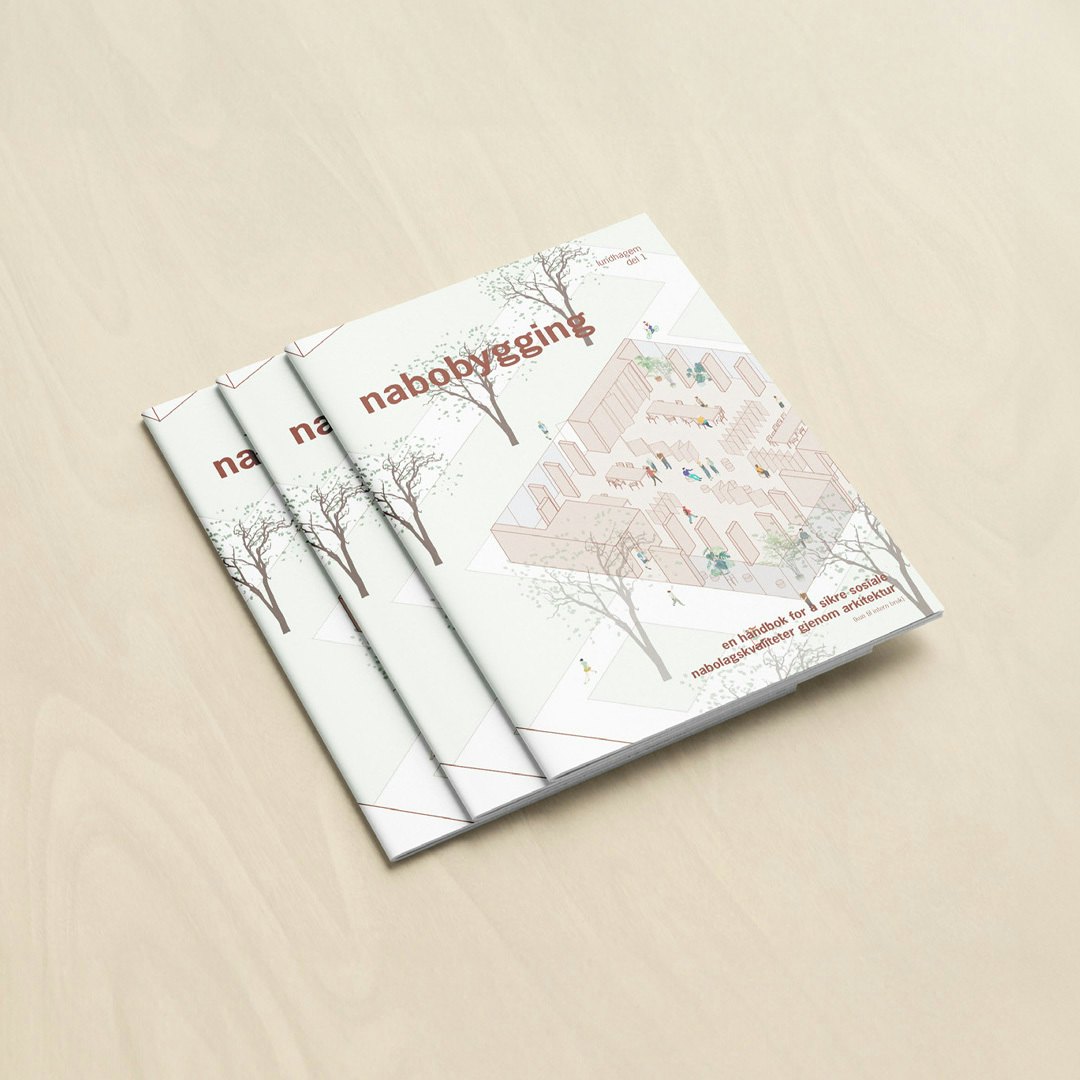
Neighbour Buildings - Social Sustainability
Part of a series of internal research publications and manuals.
With thanks to Einar Stephan from Agenda Kaupang and Stian Schjelderup.
Creating Community
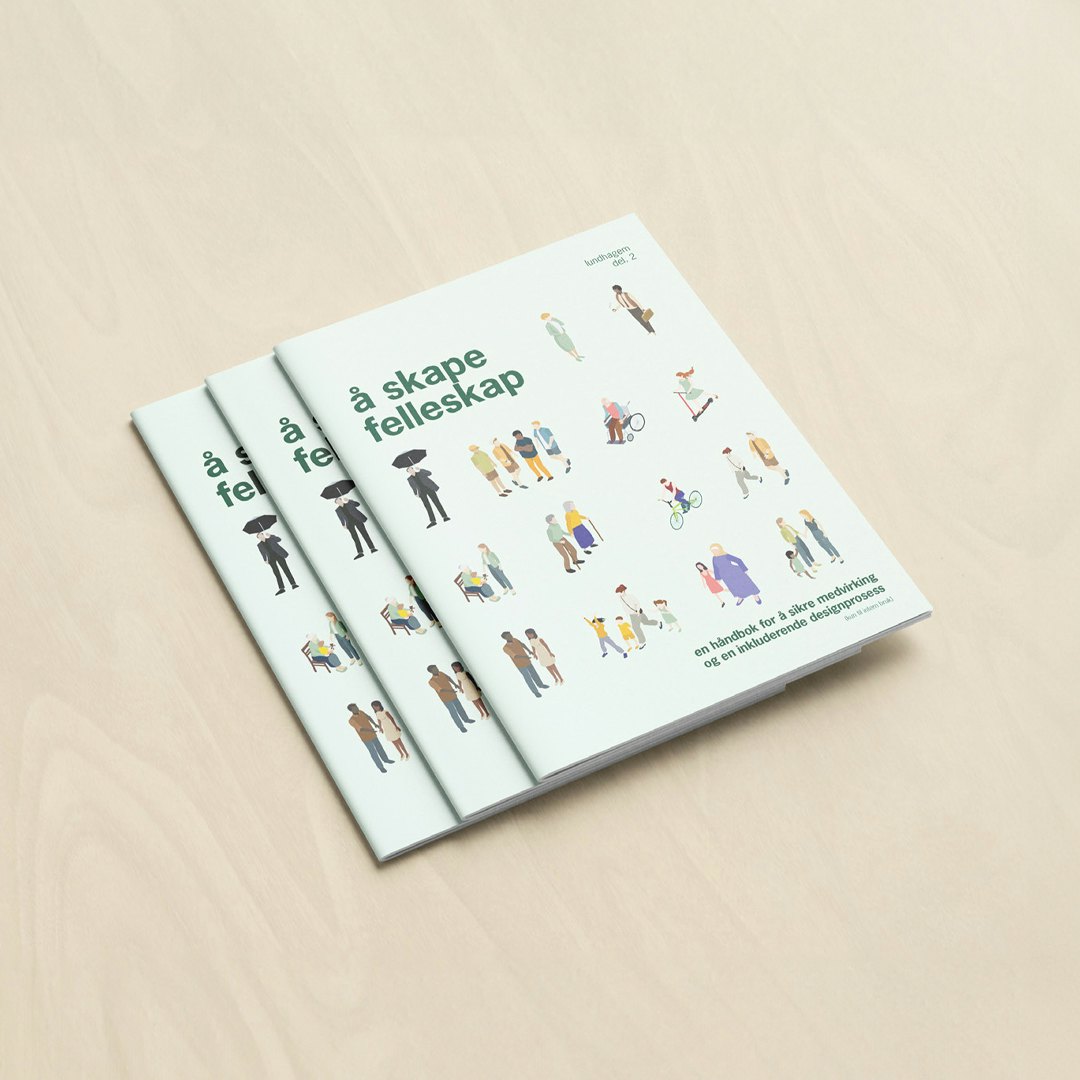
Creating Community - Social Sustainability
Part of a series of internal research publications and manuals.
With thanks to Einar Stephan from Agenda Kaupang and Stian Schjelderup.
Architecture for The Future
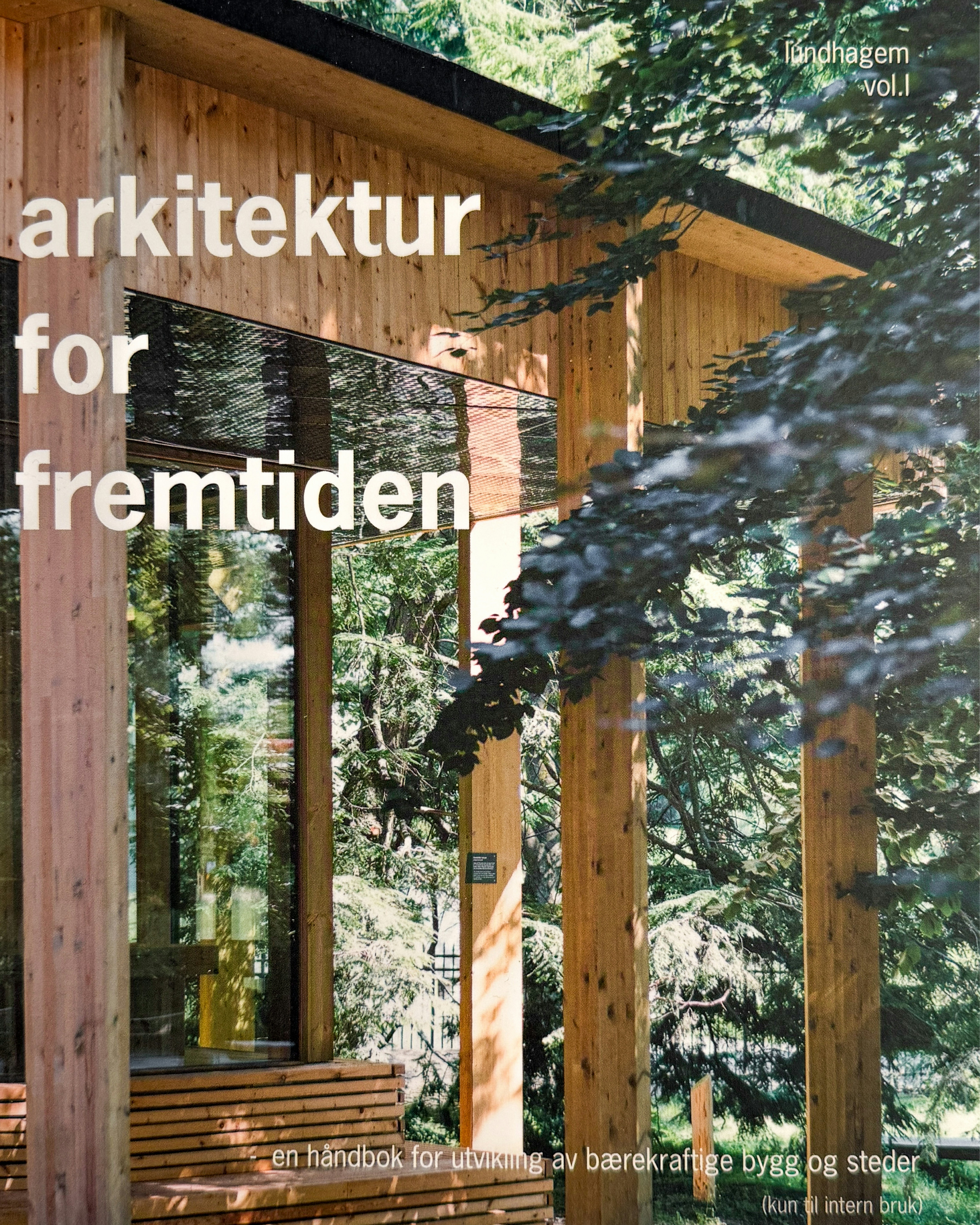
Architecture for The Future - Sustainable Methods and Frameworks
It addresses reuse, rehabilitation, and transformation, with a deeper exploration of the methods guiding these strategies.
Videos
Buildfilmed - Villa Ullern

Film by Paul Tunge. An atmospheric portrait of Villa Ullern, exploring the interplay of architecture, landscape, light, and materiality through film.
Arkitektens hjem - Svein Lund
NRK Series - Arkitektens hjem, Svein Lund
“Architects’ Homes” is a Norwegian NRK series that shows how architects live in the houses they design for themselves. It gives a straightforward look at personal choices in materials, space, and everyday use.
In the episode with Svein Lund, the focus is on his own home and way of working. The project highlights simple solutions, practical considerations, and a close relationship to the surroundings, giving a clear sense of how the house is actually used in daily life.
The World’s Most Extraordinary Homes - Cabin Lyngholmen

BBC Series - The magical Island House
"Faced with the dark, cold winters and long, light summers, Norwegians developed an architecture that combined simplicity with beauty and humanism with democratic ideals whilst remaining closely connected to nature. The resulting design tradition was born out of a belief in humanism, tradition, moderation, handcrafted perfectionism, modesty, quietude and purposefulness. Lundhagem creates architecture, landscapes and interiors inspired by the Norwegian design tradition of simplicity, minimalism and functionality."
Plattform - Scandinavian modernism

Film by Paul Tunge
Paul Tunge’s Plattform is a meditative short documentary exploring modernist architecture in Norwegian homes. Through carefully composed images and a quiet cinematic language, the film reflects on space, materials, and the relationship between architecture and everyday life. Spanning houses from the late 1950s to the early 1990s, Plattform offers a thoughtful look at the ideals and beauty of Scandinavian modernism.
Betong Norge - Cabin Knapphullet

Film by Betong Norge - Cabin Knapphullet, Sandefjord
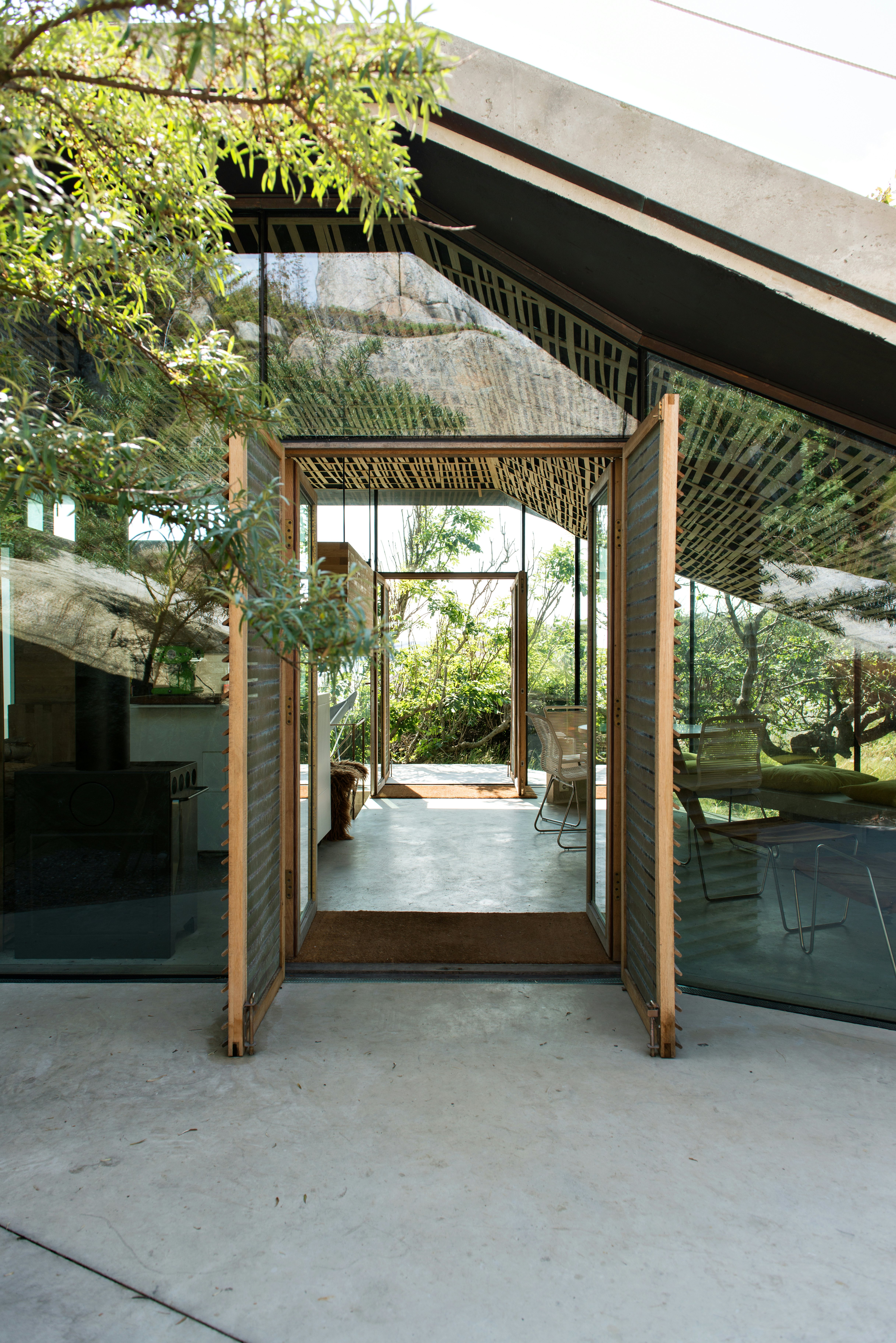
Set among the rocks and coastal vegetation on Vesterøya, the project explores how concrete can be used in close dialogue with an exposed natural setting. The film gives a quiet glimpse into the ideas behind the building, its compact layout, and its relationship to the surrounding landscape.
Arkitektenes hjem - Einar Hagem
NRK Series - Arkitektens hjem, Einar Hagem
“Architects’ Homes” is a Norwegian NRK series that looks at how architects design and live in their own houses. It focuses on everyday use, materials, and how buildings relate to their surroundings.
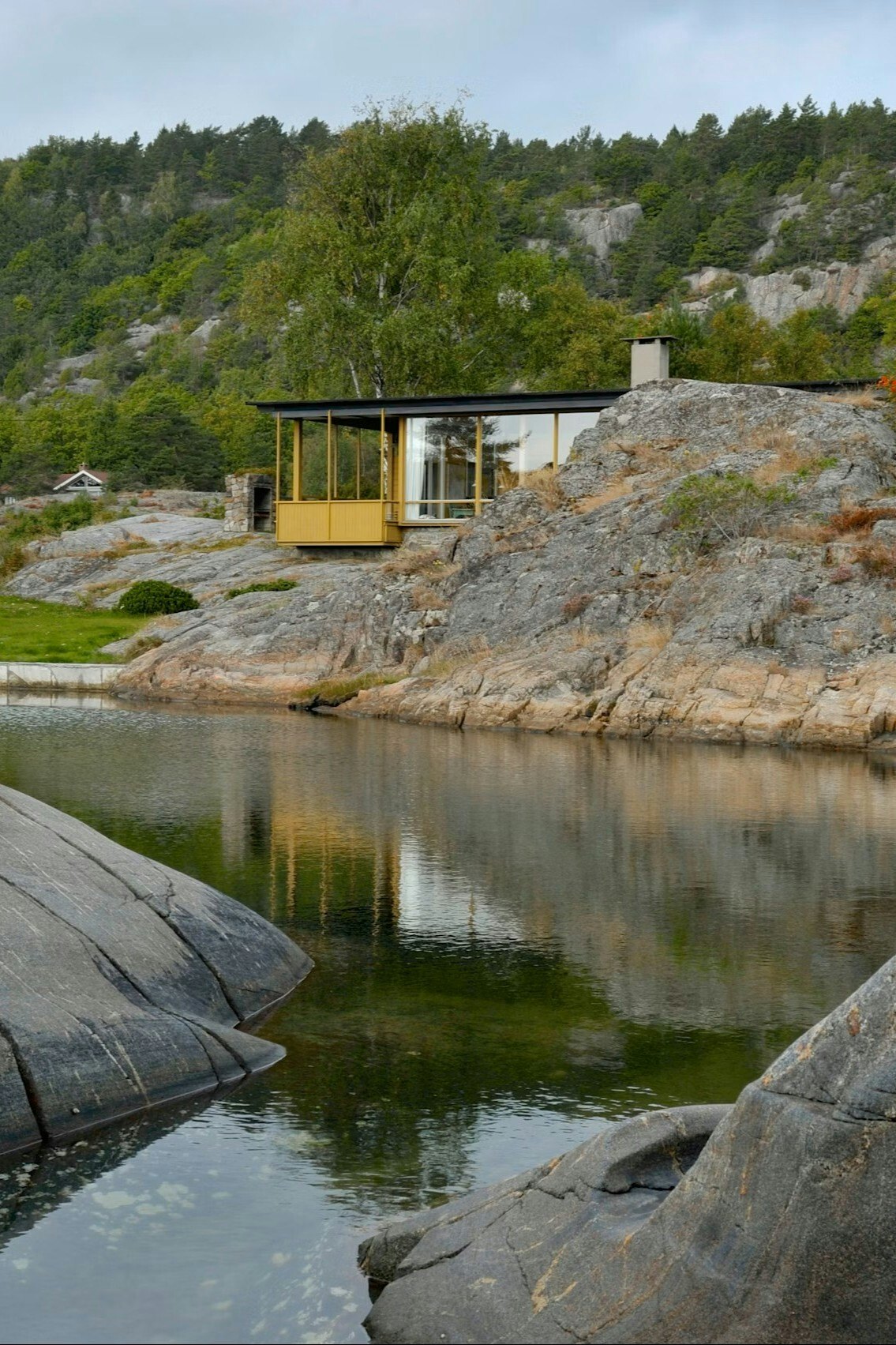
In the episode with Einar Hagem, the focus is on his coastal cabins and his own place in Bamble. The projects are set carefully into the terrain, often tucked between rocks and vegetation. Simple forms, openness, and a practical approach to the landscape define both his work and how the spaces are used.
My Retreat in Nature, DR Series - Cabin Knapphullet

My Retreat in Nature - DR Series
“Fremtidens drømmeboliger: My Retreat in Nature” is a Danish DR episode that explores homes designed as quiet escapes within natural landscapes. Architect Sonja Stockmarr travels across the Nordic countries to visit innovative and personal houses that address future challenges and suggest different ways of living. The episode presents a range of homes placed in remote or scenic environments, where practical solutions, materials, and siting play a central role. Projects such as Knapphullet are included, showing how small-scale architecture can be carefully integrated into the terrain rather than standing out. Overall, the buildings show different ways of adapting to nature and everyday use.
Buildfilmed - Cabin Knapphullet

Paul Tunge's film captures Knapphullet through movement, light, and materiality, revealing the relationship between the building and its landscape. The film offers an atmospheric portrait of the project and its spatial experience.